 Grade
GradeHow To Study For Multiple AP Exams Without Burning Out
By Dr. Education
Updated May 2026 | Reviewed by AP Experts
Table of Contents
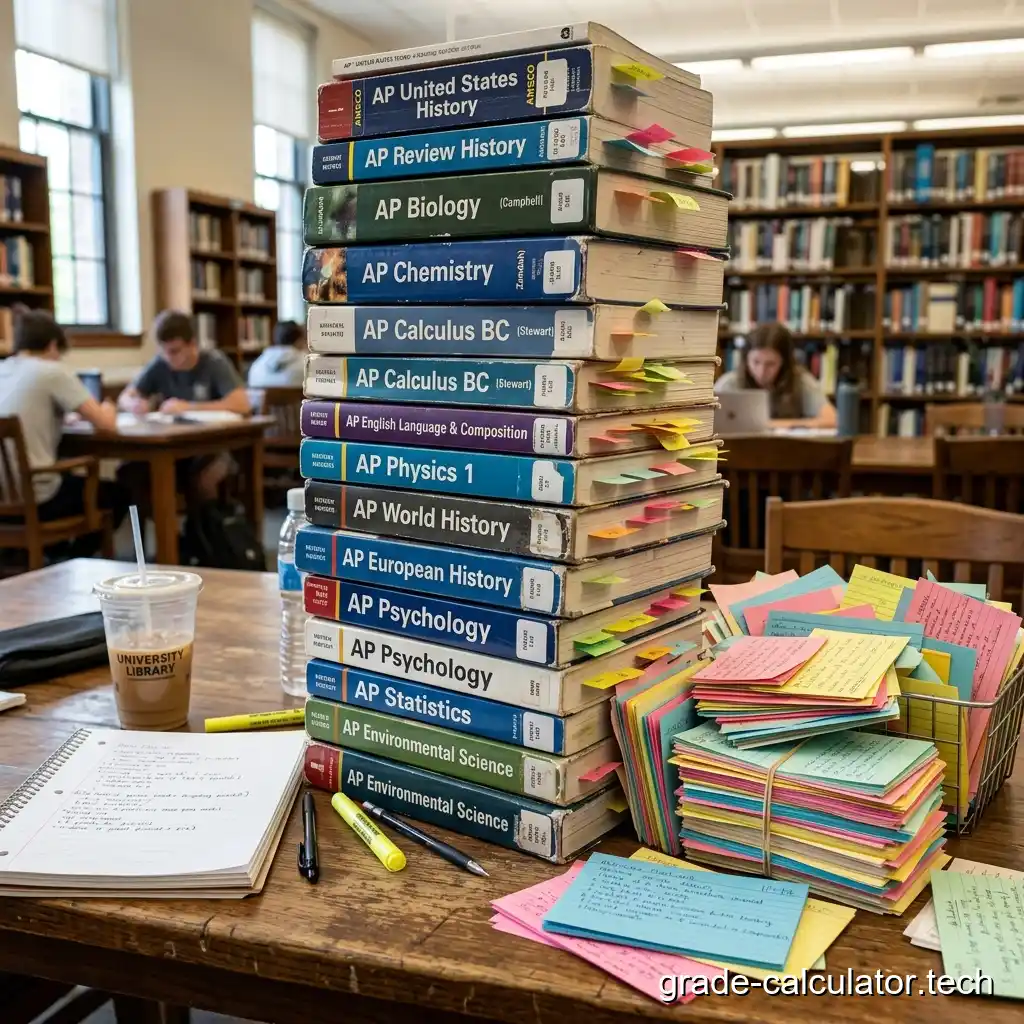
Figuring out how to study for multiple ap exams is one of the most critical skills a high school student can develop as May approaches. Balancing coursework, extracurricular activities, and the sheer volume of content required for Advanced Placement tests can feel overwhelming. However, with the right strategies, a structured study plan, and a mindset geared toward active learning, you can conquer multiple AP exams and achieve the college credit you deserve. In this comprehensive guide, we will dive deep into proven methodologies, time management tactics, and cognitive techniques designed specifically for students tackling three, four, or even more AP exams simultaneously.
Understanding The Challenge of Multiple Exams
Taking on multiple AP exams means you are essentially preparing for several college-level final exams within a span of two weeks. The sheer volume of material is staggering. For instance, AP US History covers centuries of events, while AP Calculus AB requires mastery of complex mathematical theorems. When you combine these, your brain is forced to context-switch constantly.
This context-switching is where many students fail. They study history for five hours straight, then try to do calculus and find their brain is completely fried. Cognitive fatigue sets in much faster when you don't vary your study methods or take adequate breaks. To combat this, you need a holistic approach that considers not just what you study, but when and how you study it.
Furthermore, each AP exam has its own unique format. Some rely heavily on multiple-choice questions (MCQs), while others emphasize free-response questions (FRQs) or document-based questions (DBQs). A one-size-fits-all study method will not work. You must tailor your approach to the specific demands of each test. Recognizing this early in the spring semester is the first step toward effective preparation. By understanding the format of each exam, you can better allocate your time and mental energy to the areas that need it most. This targeted approach prevents wasted effort and maximizes your potential for high scores.
Time Management: Your Most Valuable Resource
When wondering how to study for multiple ap exams, time management is the cornerstone of success. You cannot simply cram for three AP exams in the week before the tests. You must begin your preparation months in advance.
Creating a Comprehensive Study Schedule
Start by laying out a calendar starting from early March (or even February) leading up to your exam dates in May. Mark the dates of each AP exam clearly. Then, work backwards. Allocate specific blocks of time each week for each subject. Do not divide your time equally if your confidence levels vary. If you are struggling in AP Physics but excelling in AP Psychology, allocate twice as much time to Physics.
Be realistic about your schedule. Factor in your regular homework, sports, family commitments, and most importantly, sleep. A study plan that requires you to sleep only four hours a night is doomed to fail. Aim for consistent, focused study sessions rather than sporadic, exhausting marathons. Building slack into your schedule is also vital; unexpected events will happen, and you need buffer time so a missed day doesn't ruin your entire plan.
Utilize digital tools like Google Calendar, Notion, or dedicated study apps to set reminders and track your progress. Color-code your subjects so you can visually see how balanced your preparation is. Adhering to a schedule builds discipline and ensures that no subject is left behind.
Implementing the Pomodoro Technique
The Pomodoro Technique is incredibly effective for managing multiple subjects. This involves studying intensely for 25 minutes, followed by a 5-minute break. After four cycles, take a longer 15-30 minute break. During that 25-minute block, focus entirely on one subject. Do not check your phone, do not browse the internet. Pure, unadulterated focus.
When juggling multiple exams, you can use the Pomodoro technique to seamlessly switch subjects. For example, do two Pomodoros of AP Biology, take a long break, and then do two Pomodoros of AP English Language. This prevents you from getting bored or burned out on one topic and keeps your mind sharp.
Active Recall and Spaced Repetition
Reading your textbook and highlighting notes feels productive, but it is actually one of the least effective ways to learn and retain information, especially for multiple exams. You must engage in active recall.
Active recall means testing yourself on the material before you look at the answer. Flashcards (physical or digital like Anki or Quizlet) are excellent for this. When you force your brain to retrieve information, you strengthen the neural pathways associated with that knowledge, making it easier to recall during the actual exam.
Combine active recall with spaced repetition. This involves reviewing material at gradually increasing intervals. If you learn a concept today, review it tomorrow, then three days later, then a week later. Software like Anki automates this process, showing you cards you struggle with more frequently and cards you know well less often. This is crucial when you have thousands of facts to memorize across multiple subjects.
Another powerful active recall strategy is the Feynman Technique. Choose a concept, and try to explain it out loud as if you were teaching it to a middle schooler. If you stumble or use complex jargon to hide your lack of understanding, you know exactly what you need to review. Teaching the material forces you to understand the underlying logic rather than just memorizing facts.
Practice tests are the ultimate form of active recall. You should aim to take at least two full-length, timed practice tests for each AP exam. This not only tests your knowledge but also builds your stamina for sitting through long exams and helps you practice your pacing.
Subject-Specific Study Strategies
Different AP exams require different cognitive skills. A strategy that works for AP World History will not necessarily work for AP Chemistry.
Conquering STEM Exams
For STEM (Science, Technology, Engineering, and Mathematics) exams like Calculus, Physics, Chemistry, and Biology, practice problems are your best friend. Understanding the theory is only half the battle; you must be able to apply it.
Work through as many past FRQs as you can find on the College Board website. The rubrics provided by the College Board are gold mines. They show you exactly how points are awarded. Often, you can earn partial credit even if you don't get the final correct answer, simply by showing the correct setup or formula. Learn to write your answers exactly how the graders want to see them.
For subjects like Biology and Chemistry, understand the overarching systems and how they interact. Don't just memorize the steps of cellular respiration; understand *why* each step is necessary and what happens if a specific enzyme is missing or inhibited.
Mastering Humanities and Social Sciences
For exams like AP US History, European History, or Government, thematic understanding is more important than memorizing every single date. Focus on cause and effect, continuity and change over time, and comparing different eras or ideologies.
The DBQ (Document-Based Question) is a major component of history exams. Practice analyzing documents quickly. Identify the author's point of view, the historical context, the intended audience, and the purpose (often remembered by the acronym HAPP or HIPPO). You must be able to weave these documents into a coherent, persuasive essay.
For AP English Literature and Language, read actively. Practice annotating passages and identifying rhetorical devices. Write practice essays and have your teacher or a peer review them. Focus on developing a strong, defensible thesis statement and supporting it with specific, relevant evidence from the text.
Avoiding Burnout and Maintaining Mental Health
Studying for multiple AP exams is a marathon, not a sprint. Burnout is a very real threat that can derail months of hard work. Burnout is characterized by physical and emotional exhaustion, cynicism, and a feeling of reduced accomplishment.
To avoid burnout, you must prioritize your physical health. Sleep is non-negotiable. During sleep, your brain consolidates the information you learned during the day. Skimping on sleep to study more is counterproductive. Aim for 8 hours a night.
Nutrition also plays a vital role. Fuel your brain with healthy foods—plenty of vegetables, fruits, whole grains, and lean proteins. Avoid excessive caffeine and sugar, which lead to crashes and increased anxiety. The food you consume directly impacts your cognitive function and energy levels, making a balanced diet an essential part of your AP exam preparation.
Exercise is a fantastic stress reliever. Even a 30-minute walk or a quick workout can clear your head, increase blood flow to your brain, and improve your mood. Do not sacrifice your daily movement for more study time. The endorphins released during physical activity help combat the stress hormones associated with intense studying.
Finally, schedule downtime. You need periods where you are not thinking about AP exams at all. Hang out with friends, watch a movie, or pursue a hobby. Giving your brain a true break will make your study sessions much more productive when you return to them.
Test Day Preparation and Strategy
When May finally arrives, your focus should shift from learning new material to optimizing your test-taking performance.
The night before the exam, do a light review, but do not cram. Pack your bag with everything you need: sharp No. 2 pencils, pens with black or dark blue ink, a permitted calculator with fresh batteries, a watch (not a smartwatch), an ID, and a snack for the break.
On the morning of the exam, eat a nutritious breakfast. Arrive at the testing location early to avoid unnecessary stress.
During the exam, manage your time fiercely. Do not get stuck on a single difficult multiple-choice question. Mark it and move on; you can come back to it if you have time. Every question is worth the same amount of points, so maximize your score by answering all the easy ones first.
For the free-response sections, read the prompt carefully. Outline your answer before you start writing. This prevents you from rambling and ensures you address all parts of the question. Write clearly and legibly. If a grader cannot read your answer, they cannot give you points. Remember to breathe and stay calm; a clear mind is your best asset during a standardized test.
Frequently Asked Questions
Is it possible to take 5 AP exams in one year?
Yes, it is possible, but it requires exceptional time management, dedication, and a very strong academic foundation. Students who successfully manage 5 exams typically start reviewing early in the spring and rely heavily on active recall and practice tests. However, it is crucial to assess your own limits and prioritize your mental health over taking an excessive number of exams.
How many hours a day should I study for 3 AP exams?
A general rule of thumb is to dedicate 1-2 hours of study time per week, per AP class throughout the year, and increase this to 1-2 hours per day, per class in the 4-6 weeks leading up to the exams. For 3 exams, this translates to roughly 3-6 hours of focused studying per day during the peak review period (April). Remember, the quality of studying (active recall) is more important than the quantity of hours.
Should I study for multiple exams on the same day?
Yes, but do it strategically. Use the Pomodoro technique to switch between subjects to prevent cognitive fatigue. For example, study Calculus for an hour, take a break, then study History for an hour. This interleaved practice is actually shown to improve long-term retention compared to studying only one subject for an entire day.
What happens if I fail an AP exam?
Failing an AP exam (scoring a 1 or 2) does not affect your high school GPA, provided you pass the actual AP class in your school. The only consequence is that you will likely not receive college credit for that specific course. Many colleges don't even require you to report failing scores. It is a learning experience, not the end of your academic career.