 Grade
GradeThe Ultimate Guide to Improving Your High School GPA Quickly
Table of Contents
How to Apply These Strategies Effectively
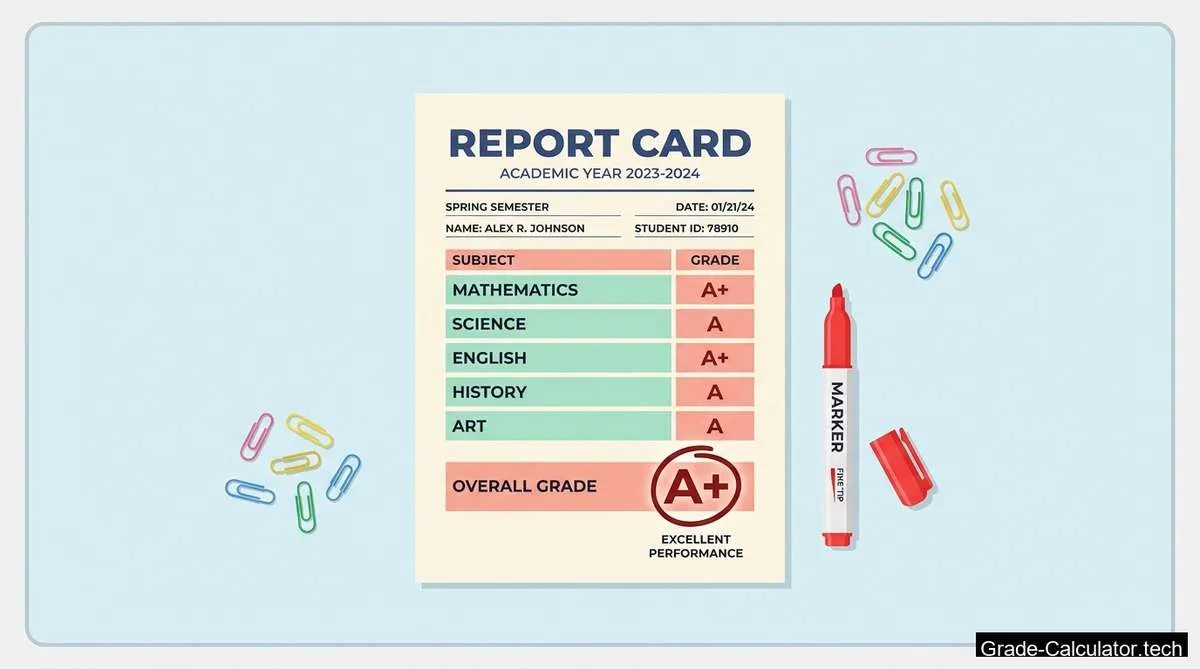
If you are looking for the fastest way to raise your gpa in high school before college applications are due, you must approach your classes with strategic, mathematical precision.
Improving your GPA is not about finding a magic shortcut or pulling endless all-nighters. It is about fundamentally restructuring how you approach your education. It involves optimizing your time management, understanding how your brain actually learns and retains information, leveraging available resources, and making strategic decisions about your course load. Below is a comprehensive guide containing actionable, scientifically backed strategies to elevate your grades.
Optimize Your Study Habits
Many students struggle not because they aren't smart, but because they use highly inefficient study methods. Passive techniques, such as re-reading textbooks or highlighting notes, create an "illusion of competence." To raise your GPA, you must switch to active learning strategies and build a consistent routine.
Active Recall and Spaced Repetition
Active recall is the process of intentionally retrieving information from your memory without looking at your notes. Every time you force your brain to retrieve a fact, you strengthen the neural pathway associated with that information. Use flashcards to test yourself or do practice problems without looking at the solutions.
Spaced repetition involves reviewing material at increasing intervals over time. Instead of cramming for 5 hours the night before a test, study for 1 hour a day for 5 days. This leverages the psychological spacing effect, interrupting the brain's natural "forgetting curve" and cementing the knowledge into your long-term memory.
Implement the Pomodoro Technique
Avoid mental burnout by using the Pomodoro Technique. Dedicate 25 minutes to intense, uninterrupted focus followed by a 5-minute break. After four cycles, take a longer break. This structured approach prevents mental fatigue and keeps your brain sharp during long study sessions.
Eliminate Digital Distractions
Create a dedicated study space free from phones, social media, and other interruptions. Your environment plays a massive role in your ability to concentrate. When studying, put your phone in another room or use apps that block distracting websites.
Proactive Academic Management
The foundation of any successful GPA improvement plan is impeccable time management and proactive behavior inside and outside the classroom.
Communicate with Your Teachers
Your teachers are your greatest resource. Approach them early in the semester, express your desire to improve, and ask for specific feedback on how to succeed in their class. Attend their office hours and ask for clarification on assignments. Showing initiative and asking questions can completely shift the trajectory of your grade.
Use a Planner Religiously
Whether you prefer a physical planner, Google Calendar, or a specialized app, all your deadlines, test dates, and commitments must live in one place. When you receive a syllabus at the start of the semester, immediately input every single due date into your calendar so you are never caught off guard.
Strategic Course Planning
Your GPA is directly impacted by the classes you choose to take. Being strategic about your schedule can maximize your weighted and unweighted GPA.
Balancing Rigor and Reality
While it is important to challenge yourself, taking an overwhelming number of Advanced Placement (AP) or International Baccalaureate (IB) courses can backfire. Ensure your course load is balanced and manageable alongside your extracurricular commitments. Don't fall into the trap of taking a class simply because it "looks good" if you know you will likely perform poorly in it.
Retake Failed Courses
If your school allows it, retaking a course where you received a low grade can significantly boost your GPA by replacing the poor grade with a better one. Speak to your academic counselor to find out if grade forgiveness or summer school options are available at your institution.
Understand the Timing: Freshman vs. Senior Year
GPA impact is cumulative. Early improvements have a much more significant "leverage" on your overall average, especially during your freshman and sophomore years. By junior and senior year, you have accumulated so many credits that a single grade moves the overall needle less. However, colleges look very closely at grade trends. An upward trend (showing significant improvement in your later years) is viewed very favorably by admissions officers.
Why It Matters: The Long-Term Impact of Your GPA
Your GPA is the single most important factor in college admissions. While standardized test scores, extracurriculars, and essays are important, admissions officers look at your transcript first. Furthermore, billions of dollars in merit-based scholarships are awarded every year based primarily on GPA. Raising your GPA can be the difference between paying full tuition and receiving a significant scholarship.
Frequently Asked Questions
- Is it too late to raise my GPA in my junior or senior year? While mathematically harder to drastically change your cumulative GPA late in high school, colleges value an upward trend. Improving your grades late in high school demonstrates maturity, academic resilience, and a commitment to improvement.
- Should I drop a class if I'm failing it? This depends on your school's policy regarding "W" (Withdraw) grades. Generally, a "W" is better than an "F", as an F severely damages your GPA. However, immediately consult your school counselor before making any decisions.
- Does taking easier classes to get a 4.0 look better than getting B's in harder classes? Most competitive colleges prefer to see students challenge themselves. Getting a B in an AP or Honors class is generally viewed more favorably than getting an A in an easy class.
- How much do extracurricular activities make up for a low GPA? While exceptional extracurriculars strengthen an application, they rarely compensate for a GPA that falls significantly below a college's typical admission standards. Academics are the priority.