 Grade
GradeDoes Middle School GPA Matter For Harvard & Ivy League Admissions?
Table of Contents
Overachieving students and anxious parents often wonder, "Does middle school GPA matter for Harvard and other elite Ivy League institutions?" The pressure to get into top-tier universities seems to start earlier and earlier every year, leading families to stress over 7th and 8th-grade report cards.
To get straight to the point: Harvard, Yale, Princeton, and other Ivy League admissions officers will never see your middle school transcript. Your official middle school GPA has absolutely zero direct impact on your college admissions chances. However, this does not mean middle school is irrelevant. In fact, middle school plays a critical, indirect role in shaping your high school trajectory, which absolutely dictates your college prospects.
In this comprehensive guide, we will break down exactly how middle school performance influences high school tracking, when middle school grades can unexpectedly appear on a high school transcript, and how to use grades 6-8 to build the perfect foundation for Ivy League admissions.
The Short Answer: Do Colleges See It?
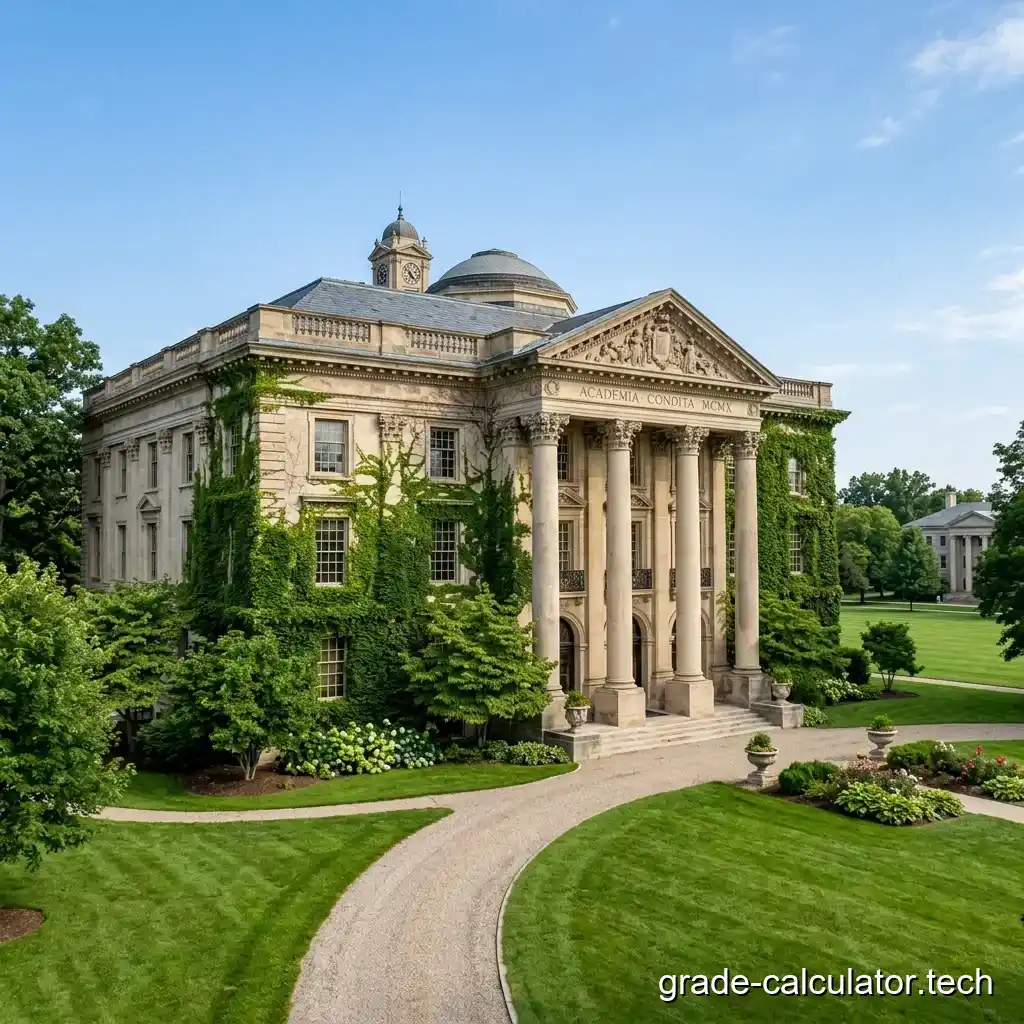
When you apply to college through the Common App, Coalition App, or university-specific portals, you are required to submit an official transcript from your high school. This transcript contains a record of all the courses you took, and the grades you received, from 9th grade through 12th grade.
Colleges do not ask for, nor do they want, your middle school transcripts. Admissions officers at elite universities are evaluating who you are at age 17 or 18, not who you were at age 13. They understand that early adolescence is a time of massive developmental changes, and a "C" in 7th-grade pre-algebra does not indicate your ability to handle a rigorous college curriculum at an Ivy League school.
Therefore, if you received a few bad grades in middle school, you can breathe a massive sigh of relief. Your academic slate is wiped completely clean the moment you walk through the doors on your first day of freshman year.
The Hidden Importance: High School Tracking
While Harvard will not see your 8th-grade science grade, that grade still matters immensely. Why? Because of a system called academic tracking.
In the vast majority of American school districts, your performance in middle school determines which classes you are allowed to take in high school. Ivy League universities expect applicants to take the most rigorous course load available to them, which usually means taking Advanced Placement (AP) or International Baccalaureate (IB) classes.
To take AP Calculus BC as a senior, you typically need to take Pre-Calculus as a junior, Algebra II as a sophomore, and Geometry as a freshman. To take Geometry as a freshman, you MUST take Algebra I in 8th grade. If you slack off in 7th grade math, you will be placed in 8th-grade pre-algebra, meaning you will start high school in Algebra I, completely knocking you off the track for AP Calculus.
Similarly, strong middle school grades in English and Social Studies determine whether you are placed in "Honors English 9" or "Standard English 9." Starting in the Honors track makes it significantly easier to transition into AP Language and Composition in your junior year.
High School Credits Taken in Middle School
There is one major exception to the "colleges never see middle school grades" rule. If you take a high-school-level course while you are still in middle school, that course—and the grade you received—will often carry over to your high school transcript.
Common examples include:
- Foreign Languages: Spanish I, French I, etc.
- Mathematics: Algebra I, Geometry
- Science: Earth Science or Biology
If your middle school offers these as certified high school credits, those grades will become part of your permanent high school record. This means an "A" will boost your high school GPA before you even start 9th grade, but a "C" will drag it down. If you perform poorly in a high school credit class during middle school, many districts offer the option to drop the credit or retake the course in 9th grade. Always consult with your middle school guidance counselor to understand your district's specific policies.
Building the Academic Foundation
Beyond course tracking and credits, middle school serves as the vital training ground for the study habits you will need to survive in AP and IB classes.
In elementary school, students can often succeed purely by paying attention in class. In high school, sheer intelligence is not enough to secure a 4.0 unweighted GPA; you must have time management, organizational skills, and effective study techniques. Middle school is the safest time to experiment with these skills. It is the time to learn how to use a planner, how to implement spaced repetition for vocabulary tests, and how to balance homework with sports and family life.
If you wait until 9th grade to figure out how to study, you run the risk of bombing your first semester while you try to adjust to the increased workload. Middle school is your sandbox—fail early, fail safely, and figure out what works for you before the grades actually count.
Extracurricular Momentum
Ivy League admissions are not just about a perfect GPA; they require exceptional extracurricular achievements. You need "spikes"—areas where you demonstrate profound talent, leadership, and dedication.
It is very difficult to build a national-level spike if you only start an activity in 9th grade. Middle school is the perfect time to explore various interests—robotics, debate, creative writing, violin, or track and field. By the time 8th grade ends, you should have identified one or two activities that you are truly passionate about.
This allows you to hit the ground running in 9th grade. Instead of joining the debate club as a novice, you join with three years of middle school experience, immediately positioning yourself for a leadership role or varsity spot by your sophomore year.
What If I Did Poorly in Middle School?
If you are reading this as an incoming high school freshman who had a terrible middle school academic record, do not panic. Your Ivy League dreams are not dead.
Colleges love an "upward trend." If you enter high school and immediately demonstrate a commitment to academic excellence, admissions officers will be incredibly impressed. While you may start in standard-level classes due to tracking, you can usually test into honors classes or advocate for yourself to be moved up in 10th grade by proving your capability and work ethic.
Talk to your 9th-grade teachers early. Let them know you want to move up to the Honors/AP track and ask what you need to do to prove you are ready. Often, an "A+" in a standard class combined with a strong teacher recommendation is enough to jump the track.
Frequently Asked Questions
Do colleges look at 8th-grade state testing scores?
No. Colleges do not care about your middle school state standardized tests. They only care about the SAT, ACT, and AP/IB exam scores you take during high school.
Should I take Algebra I in 8th grade?
If you have the mathematical aptitude and the opportunity, yes. Taking Algebra I in 8th grade is the standard path for students aiming for elite colleges, as it allows you to reach Calculus by 12th grade.
Can a bad middle school record prevent me from getting into a good high school?
If you are applying to private high schools, magnet schools, or specialized public schools, yes. These institutions will absolutely require your middle school transcripts for admission. However, if you are attending your zoned public high school, your middle school grades will only dictate your course placements.
Conclusion
Middle school grades are the invisible scaffolding of your college application. While Ivy League universities will never directly see your middle school report card, those grades dictate your high school course rigor, which is one of the most critical factors in holistic admissions. Use middle school to build your academic stamina, explore your passions, and secure your spot in high-level freshman courses. But if you stumble, remember that day one of 9th grade is a completely fresh start.